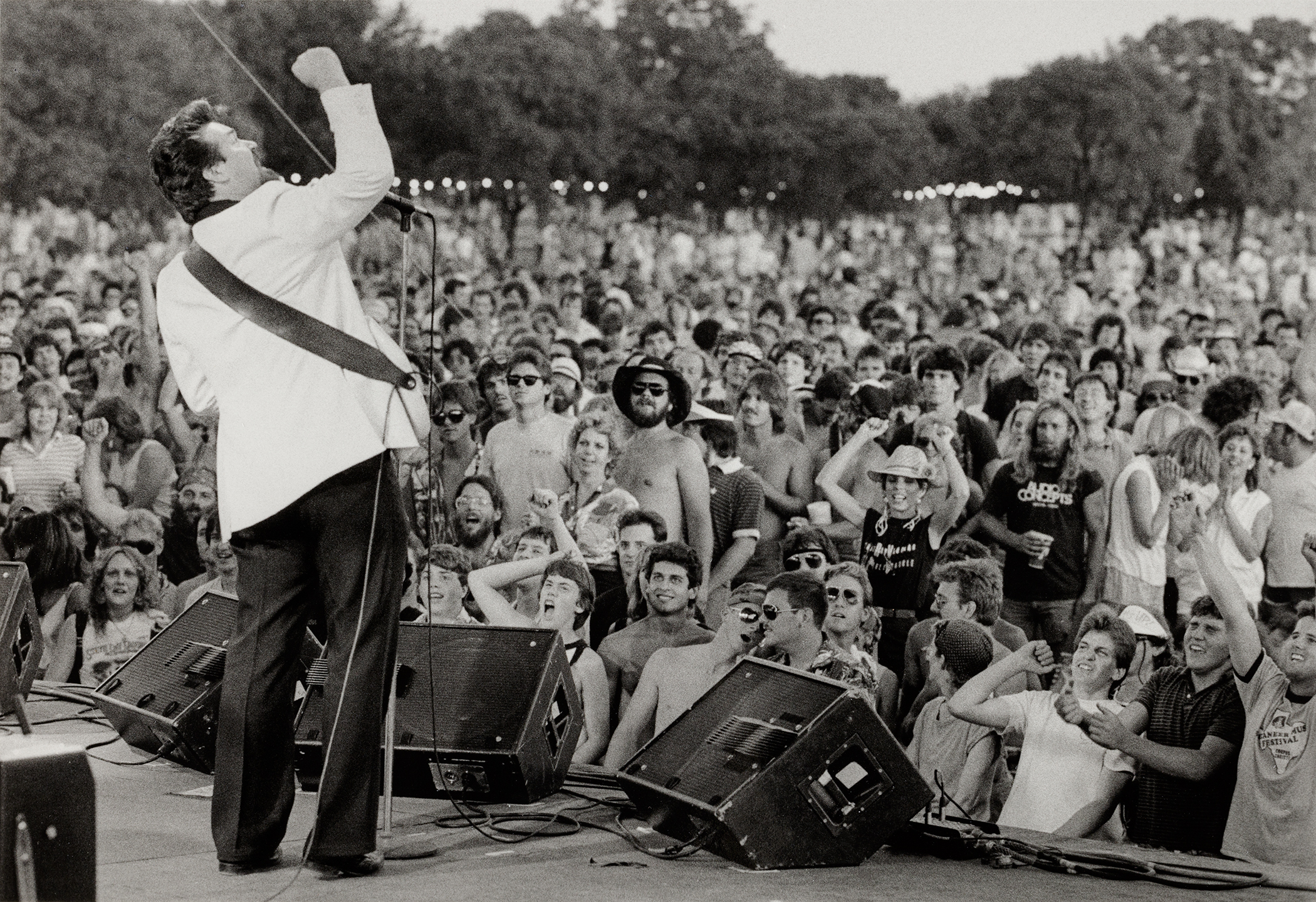
Omar Dykes
“Omar Dykes came to Texas to rock it. That’s exactly what he did. He came to a full boil. He got big. He got bigger. Omar got hot. He got hotter. Omar was a big man, living large, rolling with the rock. Nowadays Omar cannot play. His body won’t let him. He hung up his guitar, took a bow, and exited the stage. These days Omar Dykes produces a music podcast called “Brown Shoes Blues.” Omar Dykes is HOME. – Bobby Earl Smith
“I moved here with the Howlers in ‘76 from Mississippi. The Howlers played polka, waltzes, Johnny Cash, Little Richard. I hooked up with Asleep at the Wheel. Ray Benson was trying to get us a record deal. The labels would come hear us live. They said they really liked us but didn’t know what to do with us. So I steered it into blues and became Omar and the Howlers. Well I sure did have a good time playing music. I got to go all over the world. I’ve been to 26 countries. I’ve been to Lithuania. I got overseas and spent most of my time over there. I made a good living over there. I made ten times more over there as over here. What an education it was. I was working real hard when I went to play a gig up in Greenville, Texas. I didn’t know I was playing my last shot. I got this disease that made my arms turn smut black. My arms were smoking. You could see the heat coming off ‘em. My wife put yogurt on my arms to cool ‘em down. One day I was playing music and the next day I wasn’t. It can happen in a minute. I thought I’d come back from Greenville and see a doctor and… everything would be all right. That never happened. I had to bow out. Thank goodness HOME stepped up to the plate—board member Eve Monsees, and others.” — Omar Dykes
“I still love music but I can’t go out on the road. I’ve been every place I wanted to go. I’ve been in all the states, except Hawaii. But I missed a lot of my kid’s growing up. I was always on the road. You got to keep going one way or the other. But I always think in music because that’s all I’ve ever done. When I was real young I worked in a cardboard box factory for a while. That’s when I decided what I wanted to do— play music. Back then my arms were so big and strong. I could rule the roost with fear. Then my arms turned black and withered to matchsticks. I didn’t play a note for seven years.” — Omar Dykes
He hails from McComb, MS, a town with the distinction of being home turf for Bo Diddley. Omar started playing guitar at twelve where he took to hanging out in edge-of-town juke joints playing with Wakefield Coney and other authentic blues greats in the middle of the night when his parents were asleep. He formed his first band at 13 – the next youngest player being 50 – and started honing his music. He was still Kent Dykes in those days, but by the time he hit 20 he had hooked up with a crazy party band, called the Howlers, based in Hattiesburg, MS. Looking back, he says, “We had two saxophone players on baritone and tenor who wore Henry Kissinger masks. They were called the Kissinger Brothers. Not on every song, mind you. Sometimes it was Dolly Parton playing saxophone. Or Cher. And we had these cardboard cutouts from record stores for skits.” They even did fake ads for Sunshine Collard Greens and Howlers’ Fried Chicken – “for that old-fashioned taste that tastes just like Grandma.”
It was a crazy time, but a lot of fun too, with the rough and tumble Howlers playing R&B, Rock ‘n Roll and even the occasional polka and western swing tunes. But Kent Dykes mostly just wanted to play blues. By then the other Howlers had taken to calling him “Omar Overtone” because he tended to let his guitar feedback on stage while he dropped to the floor to spin on his back in a spontaneous, Big & Tall Store take on break-dancing. As he says, those performances were “sometimes fueled by, a-hmm, too many adult treats.”
By 1976, the Howlers decided to move and relocate to Austin, where such clubs as the Soap Creek Saloon, the Broken Spoke, the Armadillo World Headquarters and Antone’s had created a haven for renegade music. “We worked out of Austin for about a year,” Omar says, “but a lot of the guys decided they weren’t cut out to play music full-time for the rest of their lives. They headed back to Mississippi and Arkansas, and I decided to keep the name. Nobody objected.” And as Dykes says, Omar & the Howlers works better than Kent & the Howlers. Of such decisions are careers made.
Fronting a new lineup, Dykes honed a band capable of the sort of raw, rowdy, rambunctious blues that made Howlin’ Wolf and Hound Dog Taylor legends. Omar’s first release was Big Leg Beat in 1980, shortly followed by I Told You So 1984, earning Omar & the Howlers consecutive Austin band-of-the-year awards in 1985-1986. Hard Times in the Land of Plenty, recorded on Columbia Records, followed in 1987.
But really that was just the beginning as Omar followed up with another twelve albums in the next fourteen years; Wall Of Pride 1988, Monkey Land 1988, Live at the Paradiso, Courts Of Lulu, Blues Bag all in 1992. Blues Bag 1992 was Omar’s first solo album followed by a second solo album, Muddy Springs Road in 1995. Omar also released World Wide Open in 1995. Next up was Southern Style 1996, Swingland 1998 followed with two releases; Live At The Opera House and The Screaming Cat both in 2000. But that’s not all; Omar came on with Big Delta in 2001 and Boogie Man in 2003.
On Boogie Man, Omar brought in songwriter friends he’s made since he left Mississippi for Texas 27 years earlier. “Co-writing at that point in my life was a lot of fun. To me it’s like free songs. These are ones that I wouldn’t have had the patience to sit down and write on my own. But when you get with friends and drink coffee, tell jokes and stories, and then write something, it always turns out to be something different than what you might have done on your own.”
Plus it’s not exactly heavy lifting to work with such Texas icons as Ray Wyle Hubbard, Darden Smith, Alejandro Escovedo and Stephen Bruton.
Besides the songwriting collaborators, Omar also brought some friends into the recording studio, including guitarists Chris Duarte and Jon Dee Graham (True Believers), Chris Layton and Tommy Shannon of Stevie Ray Vaughan’s Double Trouble, George Rains (Sir Douglas Quintet and house drummer on scores of Antone’s label releases) and his frequent running-mates Terry Bozzio (Missing Persons, Jeff Beck, Frank Zappa) and Malcolm “Papa Mali” Welbourne
In 2006 Omar was back with more and did another four albums in the next four years; Bamboozled 2006, On The Jimmy Reed Highway (with Jimmie Vaughan) 2007 (with an episode on Austin City Limits – see Photos/Videos section), Chapel Hill (with Nalle, Omar and Magic Slim) 2008 and then in 2009 with Big Town Playboy.
2011 finds Omar tighter, funkier than ever. Essential Collection, a double cd compilation of Omar’s best songs throughout his career, was released in 2011 on Ruf Records. Big Guitar Music, Omar’s own record label, released I’m Gone and Too Much is Not Enough in 2012. Too Raw for Radio was released in 2013, followed by The Kitchen Sink in 2015 and Zoltar’s Walk in 2017, all on the Big Guitar Music label.
After struggling with health issues that caused an abrupt change in Omar’s touring career, he has published two books and is currently working on his third book that is scheduled to be released in the fall of 2021.
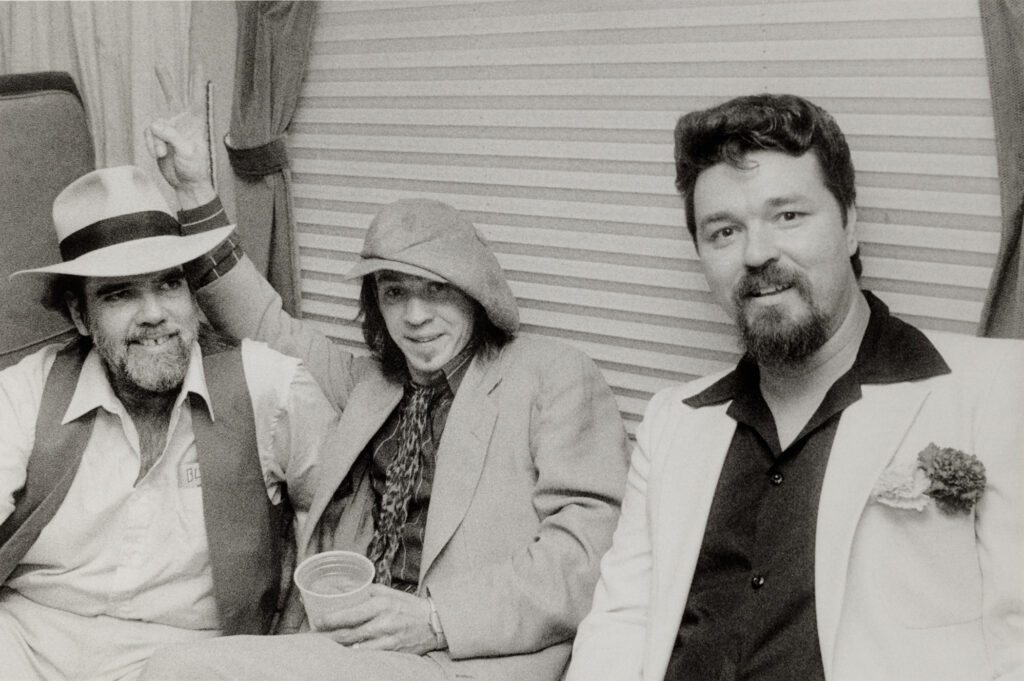
“You got to rock it while you can. Don’t let the chance slip through your hands”
—Omar Dykes